


idefeng
现场照片·真实场景解释
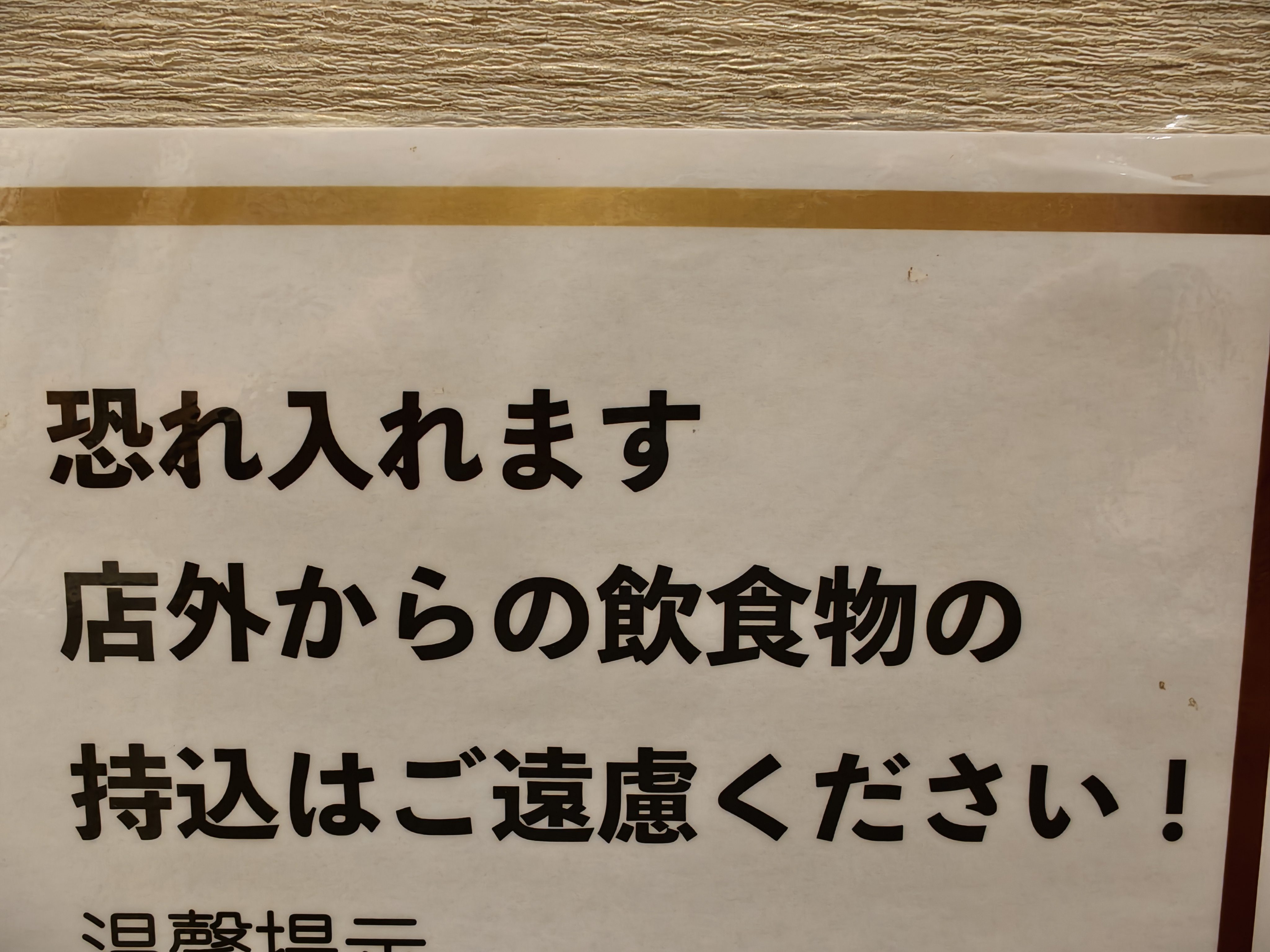
恐れ入ります 店外からの飲食物の持込はご遠慮ください!
日文原文:
- 恐れ入ります
- 店外からの飲食物の
- 持込はご遠慮ください!
- (底部露出店名残字):担々麺… / 坦々麺…
假名注音:
- おそれいります (Osore-irimasu)
- てんがいからの いんしょくぶつの (Tengai kara no inshokubutsu no)
- もちこみは ごえんりょ ください! (Mochikomi wa go-enryo kudasai!)
中文翻译:
- 不好意思打扰了 / 实在抱歉。
- 请勿携带店外饮食物品入内!
英文翻译:
- Excuse us / We kindly ask for your cooperation.
- Please refrain from bringing outside food and beverages into the restaurant!
文化与语境扩展 / Cultural & Contextual Insights - 「ご遠慮ください」的婉转拒绝与刚性规则 / The Polite Yet Firm Nuance of "Go-enryo kudasai"
- 中文:字面上「遠慮(えんりょ)」是“客气、顾虑”的意思,加上「ご〜ください」看似是在说“请您客气一点/请克制”,但在此类告示语境中是标准的“委婉禁止(No / Prohibited)”。配合开头的垫话「恐れ入ります」(不好意思劳驾/抱歉),是典型的日本服务业既保持客气尊重、又划清规则红线的表达方式。
- English: While enryo literally means "hesitation" or "restraint"—making go-enryo kudasai sound like a gentle "please refrain"—in Japanese public and business signage, it serves as a polite euphemism for a firm prohibition (strictly forbidden). Paired with the buffer phrase osore-irimasu ("pardon us / excuse us"), it maintains impeccable customer service etiquette while clearly enforcing house rules.
- 日本餐饮店禁止外带食品的卫生责任 / Food Safety Liability & Outside Food Policies
- 中文:与部分国家允许外带饮料不同,日本的绝大多数餐饮店(除明确标示 Bring-Your-Own 或部分居酒屋自选包房外)严禁外带任何饮食物(包括便利店买的瓶装绿茶、奶茶或便当)。除了保障自身营业收入外,更核心的原因在于日本极其严苛的《食品卫生法》——若客人在店内因食用自带的变质食物发生食物中毒(食中毒),店家会被连带停业调查,因此店方对此防范非常坚决。
- English: Unlike dining cultures where bringing outside soft drinks is tolerated, nearly all eateries in Japan enforce a strict ban on outside food and drinks (including bottled water/tea from convenience stores). Beyond commercial revenue, this is heavily driven by stringent compliance with Japan's Food Sanitation Act. If a patron were to suffer food poisoning (shokuchūdoku) inside the premises from outside food, the restaurant risks administrative suspension and investigations. Consequently, staff will strictly request that outside items remain stowed away.