


JPGO-DEV
开发者现场照片·真实场景解释
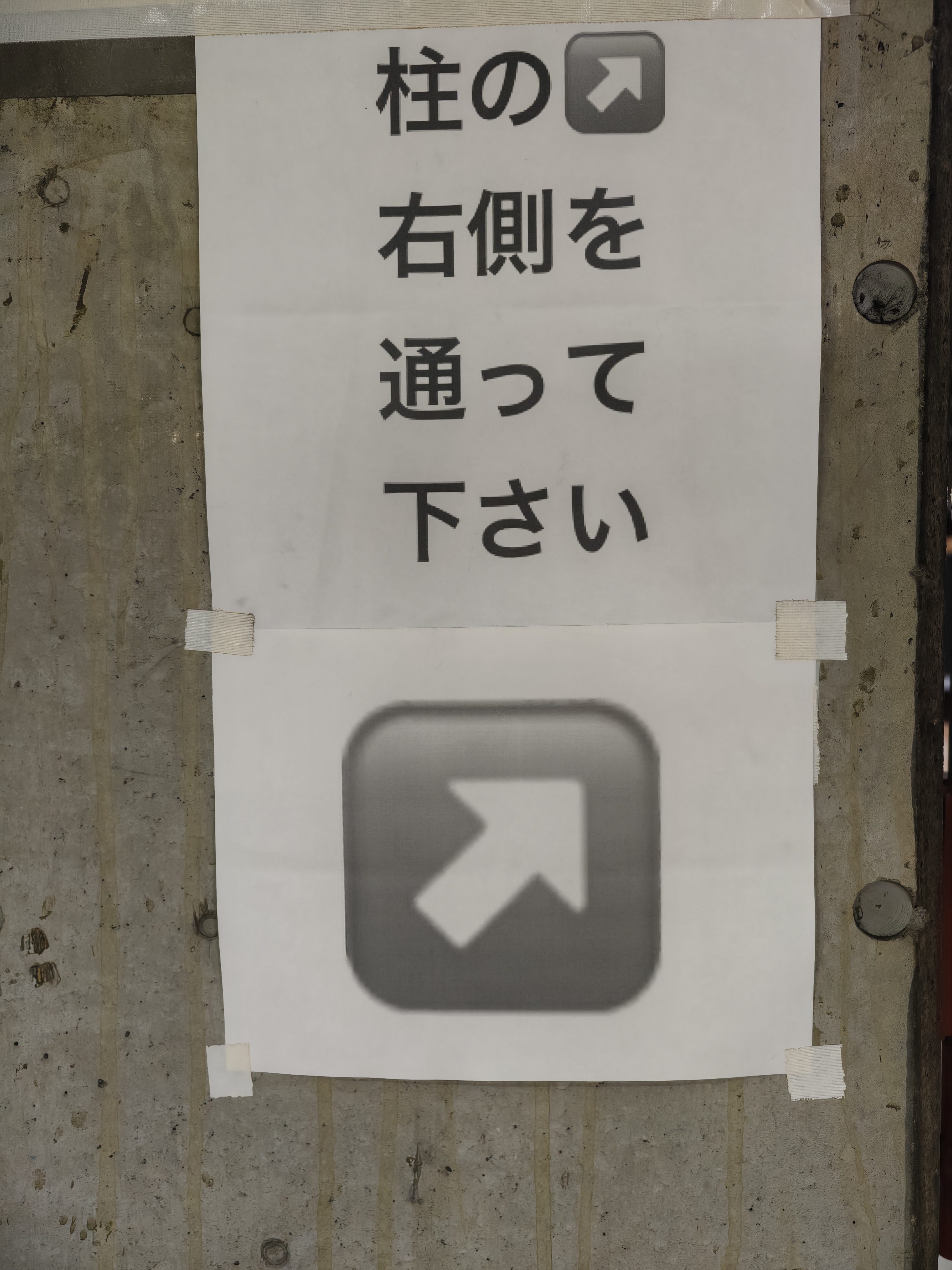
柱の右側を通って下さい
日文原文:
- 柱の↗
- 右側を
- 通って
- 下さい
假名注音:
- はしらの(みぎうえ) (Hashira no [migi-ue])
- みぎがわを (Migigawa o)
- とおって (Tōtte)
- ください (Kudasai)
中文翻译:
- 请走立柱的右侧。
英文翻译:
- Please pass along the right side of the pillar. / Please keep to the right of the pillar.
文化与语境扩展 / Cultural & Contextual Insights - 动词「通る(とおる)」与助词「を」的移动逻辑 / Spatial Movement with "Tōru" and Particle "O"
- 中文:在日语语法中,表示在某个空间“穿过、通过”的移动动词(如「通る」「歩く」「渡る」),其所经过的场所后面必须搭配表示通过点的助词「を」(如「右側を通って」)。句尾的「〜て下さい」则是最标准、礼貌的祈使请求语气。
- English: In Japanese, verbs of motion indicating movement through or along a designated space (such as tōru [pass through], aruku [walk], or wataru [cross]) require the traversal particle "o" (を), as seen in migigawa o tōtte. The ending ~te kudasai conveys a clear, polite instruction commonly found on public notices.
- 施工与人流动线引导 / Pedestrian Flow Management & Construction Safety
- 中文:该告示由普通 A4 纸打印并用米黄色美纹胶带(养生胶带)粘贴在裸露的水泥柱上,属于典型的施工现场、车站改造工程或临时活动中的人流分流导引。由于立柱左侧通常存在施工危险区、搬运通道或盲区,管理方通过文字与高对比度的图形化箭头(↗),防止行人误入危险区域或与逆向客流发生碰撞冲撞。
- English: Printed on simple paper and secured to bare concrete with light-colored masking tape, this is an archetypal temporary wayfinding sign used at construction sites, renovated station corridors, or event venues. The left side of the pillar likely harbors construction hazards, blind spots, or counter-flow traffic. By pairing bold text with a high-contrast directional arrow icon (↗), facility managers ensure pedestrians stay on a safe, organized detour path.